


By the time your pms flags a no-show, the room has been empty for six hours
The hotel industry's no-show process is built to react too late. Here's what that costs and what a better process looks like.

Ask any front office manager how their hotel handles no-shows and you will hear the same answer: the night auditor catches them during the end-of-day close, the fee gets posted, and the room is released back into inventory. It sounds reasonable. It is also a process that guarantees the hotel will always be the last to know.
The night audit is not a no-show solution. It is a no-show record
The hotel night audit typically runs somewhere between midnight and 6 AM. By the time anyone formally acknowledges the no-show, it is too late to contact the guest at a reasonable hour, too late to offer the room to a walk-in, and too late to make any decision that could recapture value from the night.
The actual window in which acting on a no-show produces meaningful revenue recovery is the early evening, roughly 6 PM to 9 PM. That is when the signal needs to arrive, not six hours later.
Five manual steps between a no-show and a recovered fee
When a no-show is finally processed, the steps are almost entirely manual:
- Run the no-show report from the PMS
- Verify which reservations did not arrive
- Post the cancellation fee to the reservation
- Charge the credit card on file
- Cancel the reservation to release the room
Each step is a point of failure. Cards decline. Reports don't get run on busy nights. The fee is quietly waived. The policy exists, its enforcement is a different matter entirely.
Industry data underlines how large this problem is. Cancellation and no-show rates on OTA platforms like Booking.com reached 37–42% in European markets in 2024, compared to 11–18% for direct bookings. For properties with significant OTA exposure, this is not an occasional nuisance…it is a structural revenue leak.
What a better process looks like
Two AeroGuest features work together to close this gap entirely.
Arrival Confirmation ensures that guests who complete online check-in are not automatically pushed into your PMS as checked in. Instead, the check-in only finalises once the guest confirms they have physically arrived at the property. This means your system reflects reality at all times and your team has a live, accurate picture of who is actually in the building.
AeroGuest's advanced communication platform then does the active work. If a guest has not confirmed arrival by 6 PM on their arrival date, the system automatically detects it and sends them a message:
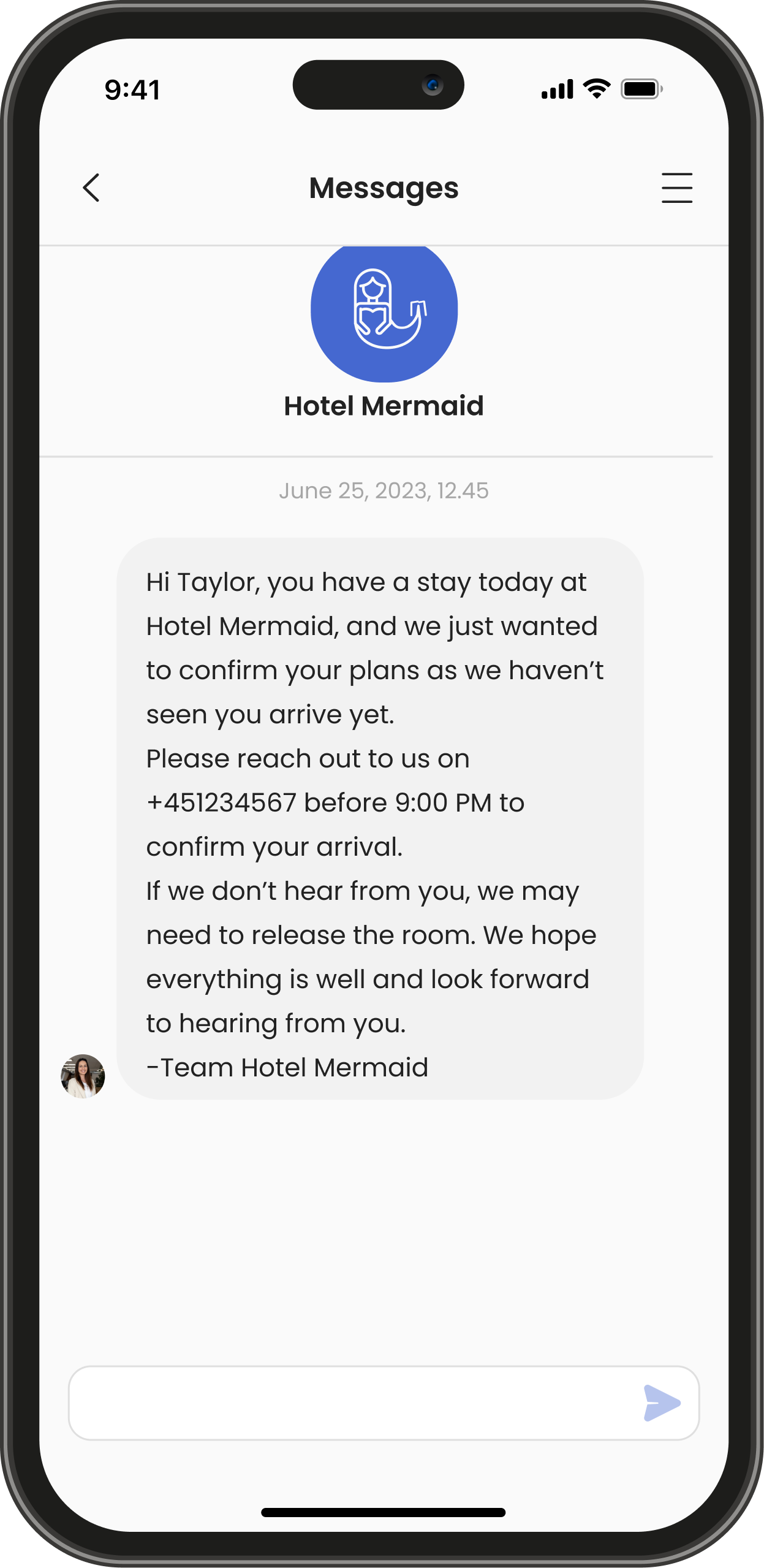
That message does two things at once: it gives the genuine late arrival a chance to communicate, and it starts the clock on a clean resolution for the guest who isn't coming.
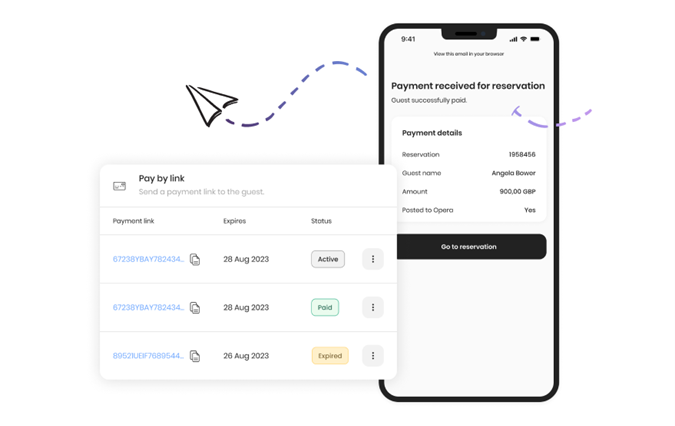
By 9 PM, if there is still no response, the room can be released, giving the property a realistic window to resell it, offer it as a walk-in, or make it available on a last-minute channel. At the same time, via AeroGuest you can send the guest a payment link for the applicable no-show fee, so the first night's revenue is collected without any manual card processing or follow-up.
The room was always going to be empty. The revenue doesn't have to be
No-shows are a permanent feature of hotel operations. What is not permanent is the gap between when they happen and when your property finds out. With Arrival Confirmation and AeroGuest's communication platform working together, that gap closes and so does the revenue window that used to disappear with it.
Similar insights


Let’s have a chat
Ready to see our product in action? Schedule your personal demo today by filling out the form. One of our representatives will reach out to you shortly to arrange a convenient time that works best for you.